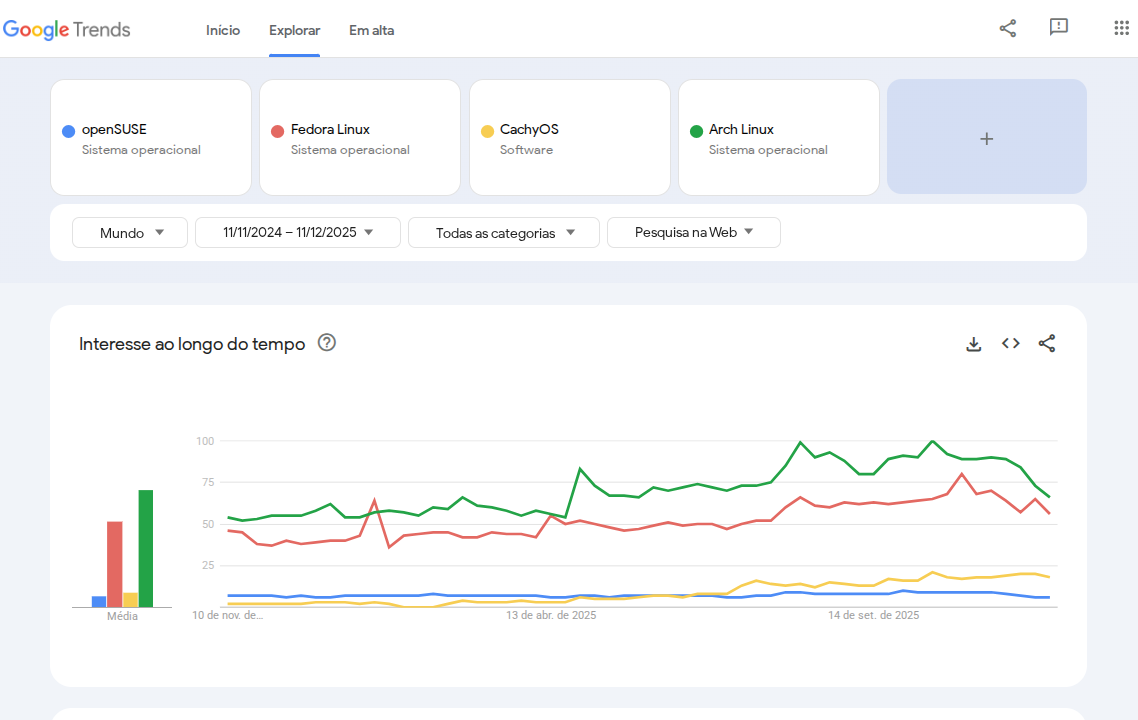
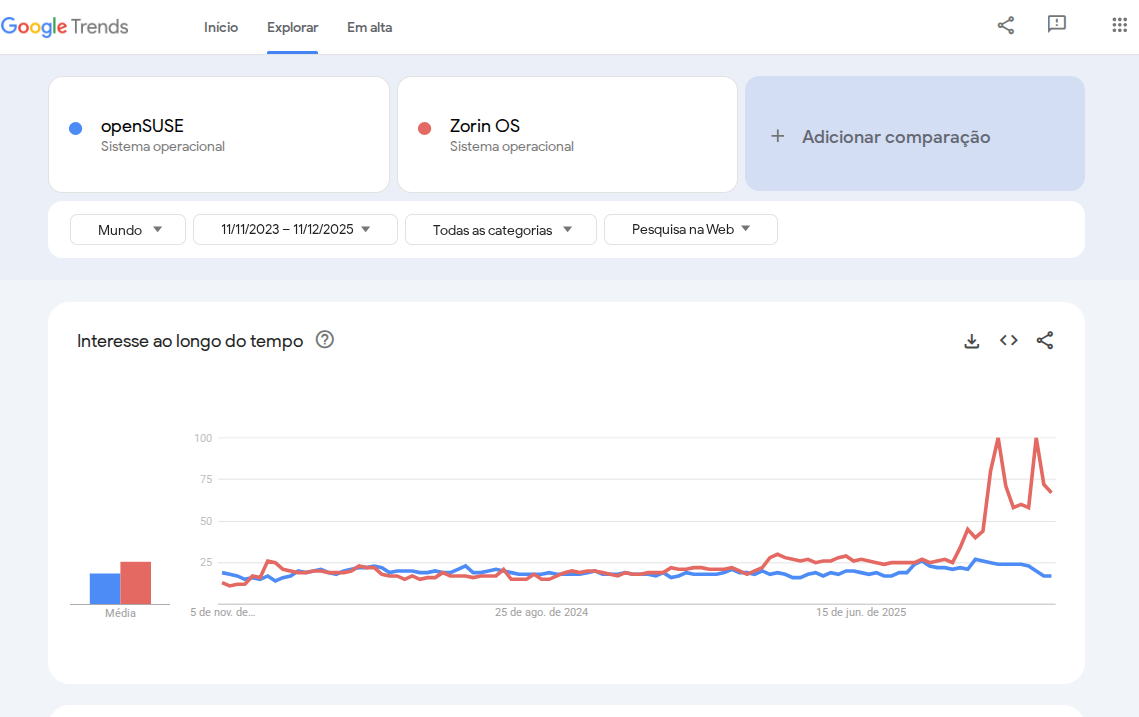
A lot of people are leaving Windows 10 and looking for Linux alternatives, and several distributions are growing fast in this period, as shown on Google Trends. But openSUSE isn’t keeping up with this movement, and that really stands out. The project feels a bit stagnant at a time that could be one of the best in recent years to gain visibility. openSUSE has solid quality, but that isn’t reaching the public because there’s a lack of presence and more active outreach.
Zorin is a desktop user friendly distro (i don’t like it much, and is heavy for old hardware); and they made a good marketing job in last months.
On the contrary leap 16 is an only-server distro, far from the opensuse friendly history of 10, 11 and 12 releases; but far from 15 release too. Suse itself don’t consider 16 as good for desktop, infact they propose 15.7 as the last release (with the only and fantastic yast software… ridicolus after they abandoned it…)
Anyway leap 16 is a redhat clone, with a kde old version… I don’t think it’s possible to lokk back, it’s too late
It’s just Google Trends search interest: a normalized score of how often people search for each term over time.
If you want the full methodology, Google explains it on the Trends help page.
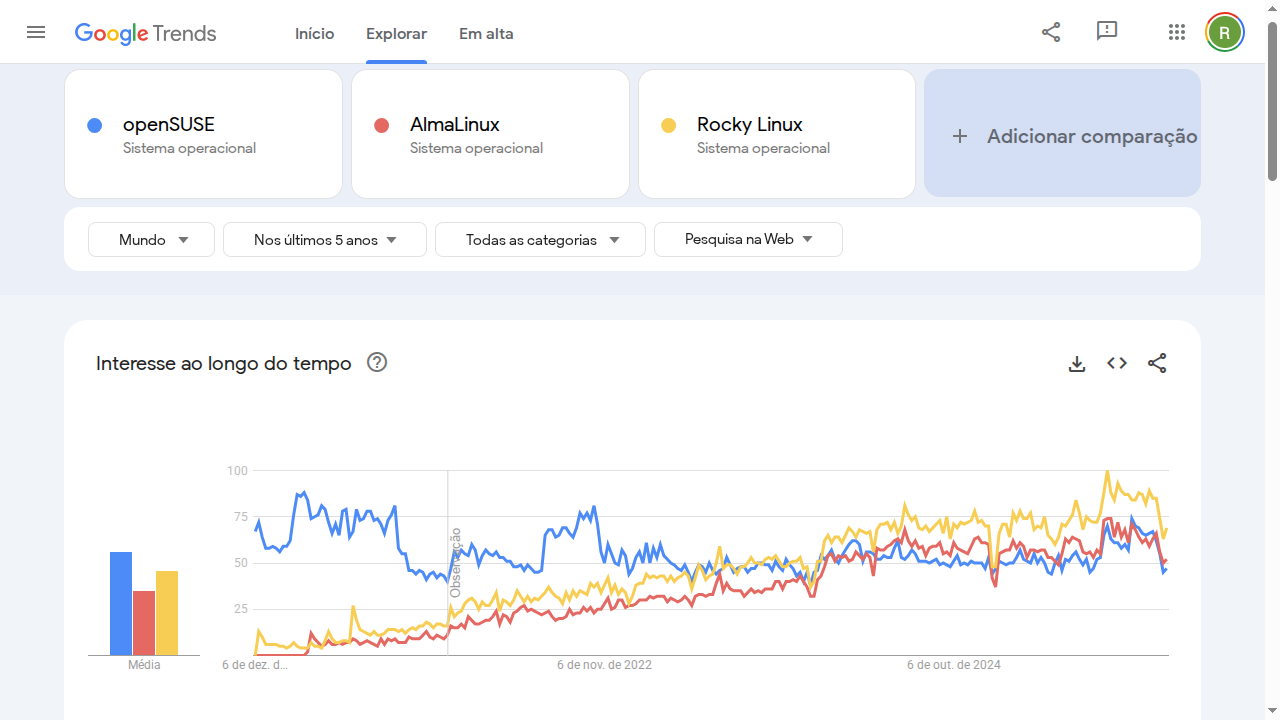
If the argument is that openSUSE shouldn’t be compared to desktop-focused distros like Zorin OS, here’s the comparison with AlmaLinux and Rocky: both server-oriented.
Even in that context, openSUSE stays almost flat while the others keep growing.
I think there’s a flawed assumption here that searching for a particular term indicates interest in finding a Linux distribution as a replacement for Windows.
The assumption presupposes that the people searching know the names of different Linux distributions (and open source projects in general, because openSUSE isn’t a distribution, it’s a project with several distributions as subprojects).
There’s also an assumption that the distributions in the openSUSE project lack presence and communication, but that’s a pretty bold conclusion to draw based on Google trends that aren’t actually about the project’s distributions.
Thanks for sharing the link, it was actually pretty fun to explore. What I can see is that the drop after late 2024 is most likely related to mirrors and CDNs taking over a larger share of the downloads, which means the main server simply shows fewer hits even if the actual number of users hasn’t changed. This kind of shift is common when infrastructure or routing changes happen, so the metric doesn’t always tell the full story. In other words, the lower numbers may reflect how downloads are being delivered, not how many people are installing openSUSE.
Still, the project could ride the current wave of new Linux users by making beginner-friendly materials more visible. A small, well-timed outreach push could help curious newcomers give openSUSE a try. And for analyzing interest from new users, Google Trends is still a better metric.
But it looks pretty outdated — for example, the ambassadors list (openSUSE:Rol de Embaixadores - openSUSE Wiki
) was last updated in April 2018 and has very few views. So I don’t think that path is very effective right now.
I also checked the map page (openSUSE:Map - openSUSE Wiki
). It’s interesting, but it hasn’t had continuous care either, and the presentation/design feels a bit neglected. Here in Brazil, the main ambassador seems to be “Cabelo” (Utilizador:Cabelo - openSUSE Wiki
), but from his social media it doesn’t look like he talks about openSUSE very often.
The bigger issue is that I can promote it among people I know or help with packaging, but new users arriving at the website still run into a lot of outdated or abandoned sections. Even the software pages are missing many screenshots, and the gallery looks very old — Debian even has a nice dedicated site just for screenshots: screenshots.debian.net
I have a few more observations, but I’ll stop here so it doesn’t get too long.
Thanks for the links — I appreciate it. The problem is that these initiatives, while interesting, are very niche and only produce a handful of posts per year. They don’t really help attract new users or increase broader interest, because the content is aimed at a very specific segment that already knows openSUSE. For people outside that niche, these materials don’t make the project more visible or appealing.
My point is more about the general public and newcomers: right now, nothing in these links really reaches them or makes openSUSE stand out during this wave of people migrating to Linux.
You are totally right. But you can communicate at the best level… then new users find opensuse 16, and after two minutes go to install something else. It’s for advanced user.
You can say that the best choose is tumbleweed, but i don’t know how many, coming from the nighmare of rolling windows, want to come in another rolling distro,
When I opened this topic, my intention was simply to exchange ideas with other users — new or experienced — and this category description suggests it’s a space for open and general conversation:
“A friendly place to converse about your adventures with openSUSE, your weekend, your boss, your new car, and generally stuff that doesn’t fit somewhere else.”
So I assumed “Open Chat” could also include reflections about the project’s visibility or the current Windows 10 migration moment. I didn’t expect that sharing thoughts here would immediately shift the discussion into the “if you think it, go implement it” direction.
I’m not trying to demand action — just to talk. And I think that kind of exchange can still be valuable. After all, ideas do matter: even in this thread, I noticed some members hadn’t used tools like Google Trends before, which can be extremely helpful for communication and outreach. That’s already a positive outcome from a simple conversation.
My point is only that newcomers benefit when the forum feels welcoming and open to casual brainstorming too. A more relaxed culture around informal discussion can help attract and retain people who might later become contributors.
Maybe as a first small thought — just as a thought, nothing to implement — the project could ask itself: Is now the moment for openSUSE to be more open to new users?